

Buying the wrong size air conditioner feels a lot like wearing the wrong shoe size. Too small and you’re uncomfortable all day. Too big and it still doesn’t feel right, plus it costs more than it should.
That’s why AC unit sizing matters so much, especially if you’re replacing a system based on what used to be there. In many homes, the “old size” was never correct in the first place.
This guide walks through practical, no-hype ways to size an AC (or heat pump) using real inputs, not rules of thumb, so you can compare quotes with confidence.
What “right-sized” really means (BTU, tons, and humidity)
AC sizing is about how much heat your home gains on a hot day, and how much moisture it needs removed to feel comfortable.
A few terms you’ll see:
- BTU/hr: How much heat the system can remove per hour.
- Tonnage: A simpler label for capacity. 1 ton equals 12,000 BTU/hr.
- Sensible vs latent: Sensible is temperature drop, latent is moisture removal. In humid climates, latent capacity can matter as much as raw tonnage.
If your system is right-sized, it should run longer cycles on hot days, keep temperatures even, and control humidity without feeling clammy.
For deeper background on why load calculations exist, ACCA’s overview of Manual J residential load calculations explains the standard contractors are trained to follow.
Why “square footage rules” usually miss the mark
You’ll hear advice like “one ton per 500 square feet.” It sounds simple, but it ignores the parts of your home that change the load the most.
Two 2,000-square-foot homes can need very different systems because of:
- Insulation levels and air leaks
- Window size, type, and shade
- Ceiling height and open layouts
- Duct losses in a hot attic
- Number of people and cooking habits
- Local weather patterns and humidity
In the Charleston area, humidity is a constant factor. Oversizing often causes short cycling, where the system shuts off before it pulls enough moisture out. The house hits the thermostat number, but it still feels sticky.
Fast homeowner checks that reduce guesswork
You don’t need special software to gather useful clues before you get quotes. Think of this as building a “home comfort profile.”
Check what you have (but don’t assume it’s correct)
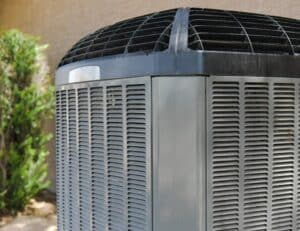
Look at the outdoor unit’s data plate for capacity. Many model numbers also hint at size (for example, “36” often points to about 36,000 BTU, or 3 tons). It’s a clue, not a decision.
Watch how it runs on a hot day
On the warmest afternoons, does it run nearly nonstop and still fall behind, or does it blast cold air in short bursts? Long steady runs often point to better sizing, while constant short bursts can suggest oversizing or airflow issues.
Note comfort problems room by room
Write down what’s happening, not what you think the fix is:
- One or two rooms always warmer
- High indoor humidity
- Big temperature swings between floors
- Weak airflow from certain vents
Those notes help a contractor separate “needs more tons” from “needs duct fixes.”
Manual J load calculation: the closest thing to “no-guesswork”
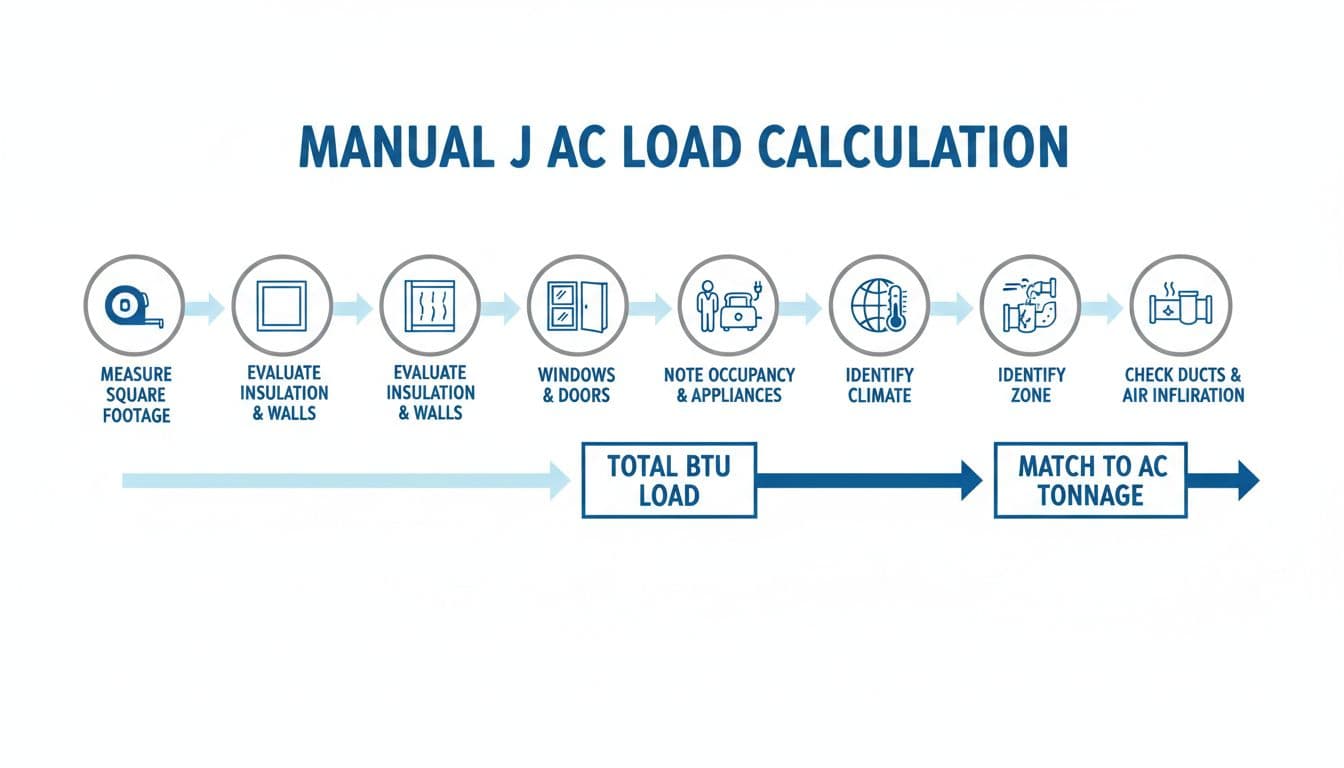
A Manual J load calculation is the industry method for figuring out how much cooling your home needs at your design conditions. It takes your home’s real features and estimates heat gain and moisture load.
What data actually changes the result
A quality load calc uses inputs like:
- Conditioned square footage and ceiling height
- Insulation levels in attic and walls
- Window area, type, and orientation
- Infiltration (how leaky the home is)
- Local climate data
- Duct location and leakage
- People and internal heat from appliances
Can you estimate it online?
Online tools can help you sanity-check ballpark ranges, especially if you’re comparing wildly different bids. For example, this HVAC load calculator can show how location and home features swing recommended capacity.
Still, for a final equipment choice, nothing beats a proper Manual J done with accurate inputs.
Convert the load to tons, then verify airflow and ducts
Once you have a cooling load in BTU/hr, converting to tonnage is simple. Matching equipment correctly is the harder part, because real comfort depends on airflow, duct design, and humidity control.
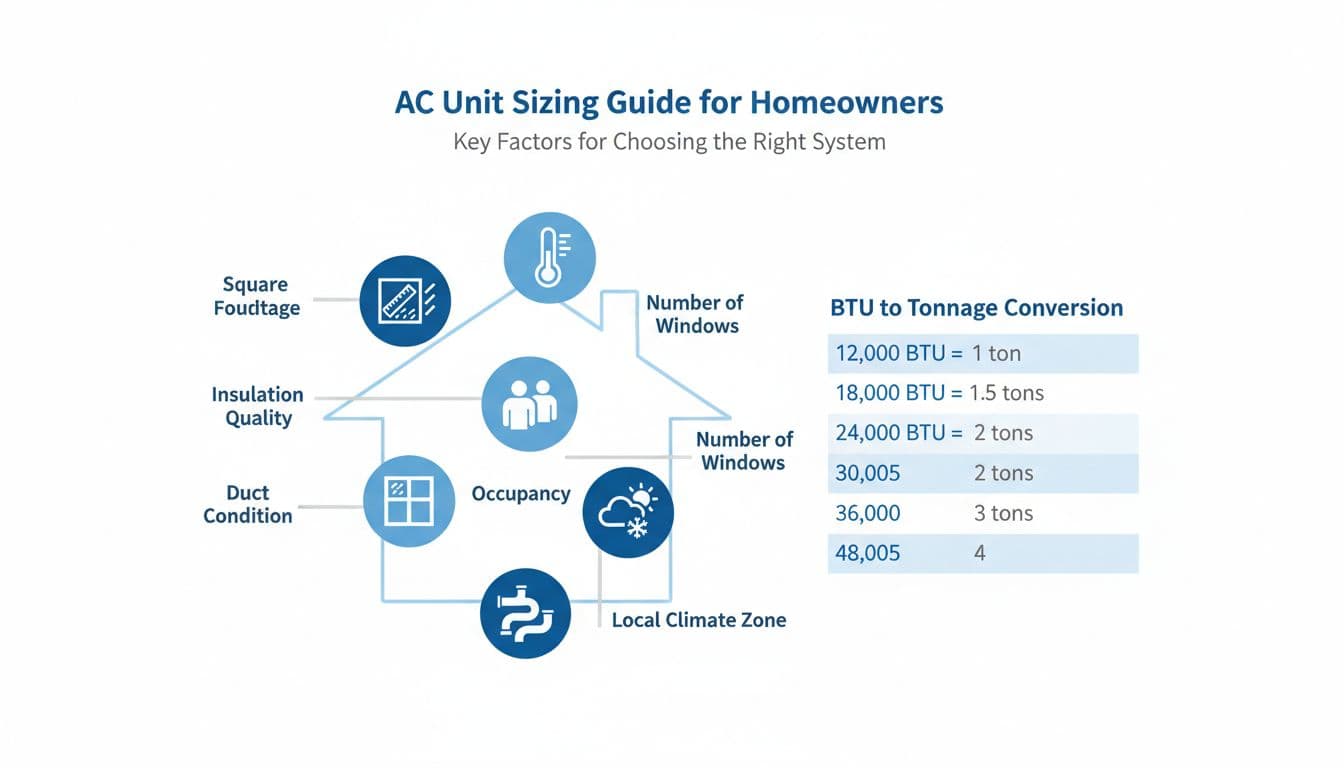
Quick BTU/hr to tons reference
| Cooling Capacity (BTU/hr) | Approx. Size (Tons) |
|---|---|
| 18,000 | 1.5 |
| 24,000 | 2 |
| 30,000 | 2.5 |
| 36,000 | 3 |
| 42,000 | 3.5 |
| 48,000 | 4 |
| 60,000 | 5 |
The ductwork “gotcha”
Even perfectly sized equipment will struggle if the duct system can’t move enough air. Common issues include crushed flex ducts, undersized returns, and leaks in an attic that dump cooled air outside.
If one contractor talks only about tons and SEER, and another inspects ducts and static pressure, the second one is usually closer to a real fix.
How to compare HVAC quotes without getting overwhelmed
When bids come in, the goal isn’t just finding “the best price.” It’s finding the best match between your home’s load, your duct system, and your comfort goals.
Ask each contractor:
Did you run a Manual J (or show the inputs)? If not, you’re back to guessing.
What’s the plan for humidity control? This matters in coastal South Carolina.
Will you confirm airflow and duct condition? Right size needs right airflow.
What model and size are you proposing, and why? You should hear a reason, not a shrug.
If you’re planning a replacement, professional installation matters as much as the equipment. Air Pros provides professional AC unit installation services and we provide high quality heating and air conditioning services throughout the Charleston, SC area.
If you’re choosing a heat pump for both heating and cooling, sizing still starts with a load calculation, then matching the system to your home and ductwork. Learn more about heat pump installation and sizing solutions.
Conclusion: right size beats “bigger is better” every time
The best AC size isn’t a guess, and it isn’t always what your neighbor has. It’s the capacity that matches your home’s real load, supports long steady run times, and keeps humidity in check.
If you want help sorting through options, Air Pros is a Heating & Air Company in North Charleston that can measure, calculate, and install the right system for your home. Schedule an estimate through https://airproscooling.com/contact-us/, and bring your questions and your latest quote.